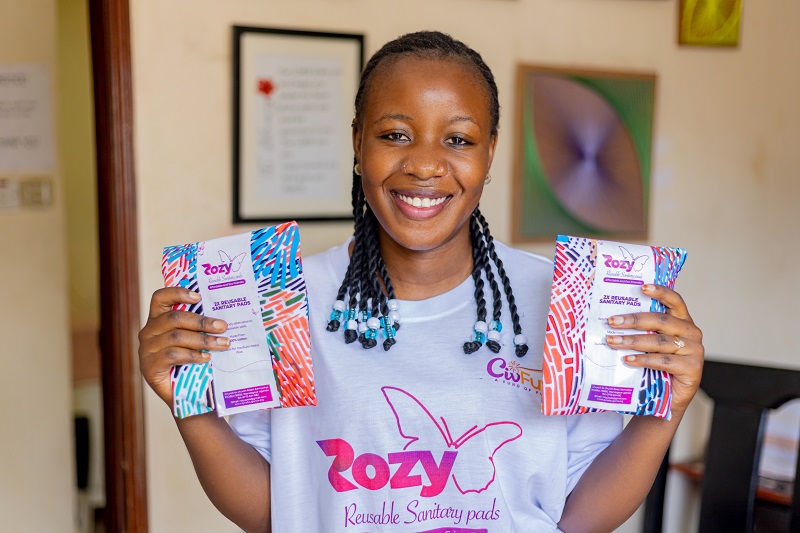
QAULITY, AFFORDABLE AND ECO-FRIENDLY RESUABLE SANITARY PADS
Rozy reusable sanitary pads is a social enterprise under Slum Youth Rehabilitation and Development Organization-SYRADO sustainability plan. This means that income obtaining from selling the pads at a cost friendly price is channeled into supporting SYRADO activities. The major reason for Rozy pads’ existence is to end period poverty while saving the environment.
Millions of girls in the rural and rural-urban areas of Uganda are disempowered by the simple biological process of menstruation through stigma and period poverty. SYRADO through Rozy pads thrives to support and nature the ones that lack these basic facilities like under pads and to ensure personal hygiene for women and girls.
Rozy pads aim at restoring menstrual hygiene management and dignity through reusable sanitary pads training, reusable sanitary pads distribution, awareness and information workshops, establishing self-help groups and MHM club champions in school.
About Rozy Pads
Rozy pads have microfiber for enhanced absorbency, helping to lock in moisture. They are made of baby cotton materials to avoid itching, irritation and burning thus making menses very comfortable for women and girls. Rozy pads are chemical free which makes them healthy for girls and women to use during menstruation.
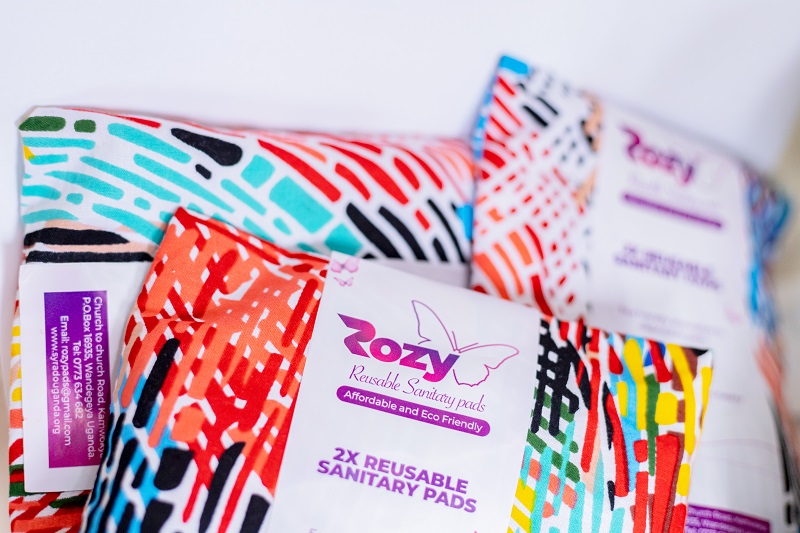
Rozy pads hove a water proof layer to prevent leaks, and protect clothing. Rozy pads are packed in a colorful cotton Kitenge material in numbers of twos and fours respectively to cater for all types of people.
Our vision
To ensure that women and girls have access to more economical and environmentally friendly sanitary pads.
Our Mission
To develop an eco-conscious, non-toxic user- friendly, cost-effective range of reusable sanitary pads for rural and semi-urban women and girls.
Rozy Pads Objectives
1. To end period poverty
2. To develop an un eco-conscious and non-toxic user- friendly reusable pads
3. To support girls to stay in schools and avoid child marriages and teenage pregnancies.
4. To conserve and protect the environment
Rozy Pads scope:
Primary – range dedicated to rural and semi-urban poor women and girls of Uganda.
Secondary – range dedicated to eco-conscious urban privileged women and girls
Why Rozy reusable Sanitary pads
A Rozy sanitary pad is an absorbent personal care product worn by woman while she is menstruating. There is a rising demand for quality and affordable sanitary pads among slum and rural women due to lower cost of reusable sanitary napkins and rising hygiene awareness.
Most Ugandan women and girls fashion up pads out of cotton cloth as a home-made and inexpensive solution to the hygiene and comfort needs during periods. These home-made cloth pads are washed and reused but hey lack the absorbing and liquid retention capacity of sanitary pad and hence may lack in hygiene and comfort.
Studies show that the practice of using cloth during periods is associated with very high risk of cervical cancer. Hence, there has a strong demand for sanitary pads that are cost-effective and locally made.
Support the Movement – Place Your Order Today
Join thousands of women choosing comfort, dignity, and sustainability.
Order Rozy Pads for yourself, your daughter, your school, or your community initiative.